
Many families living in huts and temporary houses in rural Tamil Nadu want to know whether they can get financial assistance to build a permanent concrete house. This is where the Kalaignarin Kanavu Illam Scheme becomes important.
People searching for Kalaignarin Kanavu Illam application form PDF download usually want to know three things: where to get the application form, who is eligible for the scheme and how to check whether their family has been selected.
However, there is one important detail to understand before looking for a PDF. Kalaignarin Kanavu Illam is not a regular online application scheme in which anyone can simply fill out a form and receive approval. Beneficiary selection is linked to the government’s rural housing survey and verification process.
In this article, we explain the scheme, its eligibility conditions, available PDF documents, beneficiary selection and where to contact officials for assistance.
Kalaignarin Kanavu Illam Scheme
| Particulars | Details |
|---|---|
| Scheme name | Kalaignarin Kanavu Illam |
| State | Tamil Nadu |
| Department | Rural Development and Panchayat Raj Department |
| Main objective | Construction of permanent houses for rural hut-dwelling families |
| Initial target | 8 lakh houses |
| Initial launch year | 2024–25 |
| Initial announced house cost | Up to ₹3.50 lakh, including convergence |
| Beneficiary selection | Housing for All Survey and official verification |
| Application mode | Through the prescribed government selection process |
| Official website | tnrd.tn.gov.in |
Kalaignarin Kanavu Illam Application Form PDF Download
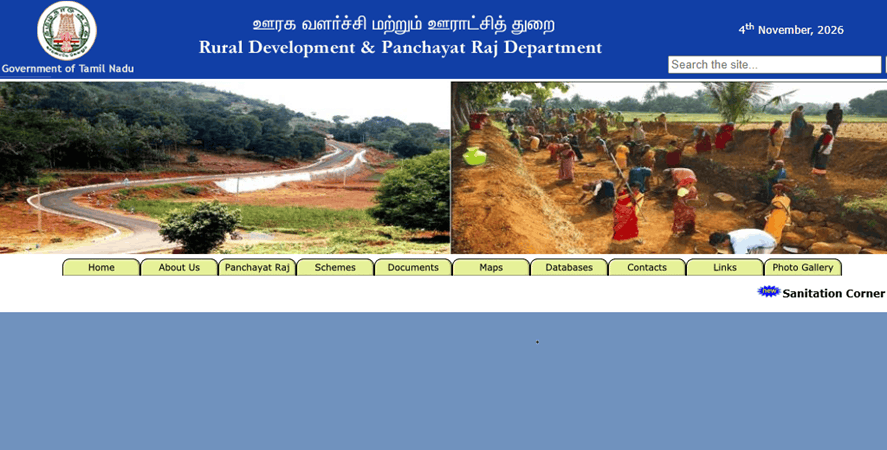
If you are searching for the Kalaignarin Kanavu Illam application form PDF, visit the official Tamil Nadu Rural Development and Panchayat Raj Department website first.
Official website: https://tnrd.tn.gov.in/
The department publishes scheme guidelines, government orders and house design documents. These documents are useful for understanding the scheme, but they should not be confused with a blank beneficiary application form.
You can follow these steps:
- Open the Tamil Nadu Rural Development Department website.
- Find the State Schemes section.
- Select Kalaignarin Kanavu Illam.
- Open the available scheme details and government orders.
- Download the relevant PDF document for reference.
- For beneficiary selection or application-related clarification, contact your Village Panchayat office or Block Development Office.
Important: Do not download an unofficial application form and assume that submitting it will guarantee a house. Confirm the current application and selection procedure with your local rural development office.
What is Kalaignarin Kanavu Illam Scheme?
Kalaignarin Kanavu Illam is a Tamil Nadu government housing initiative designed to help rural families move from huts to permanent concrete houses.
The idea behind the scheme is quite straightforward. A family living in a weak hut should have a safer place to live, especially during heavy rain, strong winds and other difficult weather conditions.
The government initially announced a target of constructing eight lakh houses over six years, with the broader objective of making Tamil Nadu free from huts by 2030.
During the first phase in 2024–25, one lakh houses were planned. The government subsequently issued further implementation guidelines for 2025–26.
The scheme is administered by the Rural Development and Panchayat Raj Department.
Who Can Apply for Kalaignarin Kanavu Illam?
Eligibility is an important part of this scheme because not every person living in a rural area automatically receives assistance.
The original scheme guidelines include the following conditions:
- The household should be identified through the Housing for All Survey database.
- The family should be living in a hut or otherwise fall within the eligible rural housing category.
- The beneficiary should have a patta or valid ownership document for the house site.
- Families living on unobjectionable poramboke land may be considered after the prescribed ownership regularisation process.
- Families without a house site may be provided a free house site under the applicable government provisions.
- The beneficiary must satisfy the department’s verification and selection requirements.
The final selection depends on the applicable government guidelines and availability of sanctioned houses.
How to Check Your Name in the Beneficiary List?
If your family is living in a hut and you want to know whether it has been selected, visiting the local Panchayat office is a practical first step.
Follow this process:
- Visit your Village Panchayat office.
- Ask whether your household is included in the Housing for All Survey.
- Request information about the Kalaignarin Kanavu Illam beneficiary selection list.
- Provide your household and land-related details for verification.
- If your name is not included, ask the officials whether any correction or grievance procedure is available.
You can also approach the Block Development Office (BDO) to enquire about the beneficiary selection status and sanctioned house details.
Documents to Keep Ready
Although the exact documents depend on the verification requirements, families should keep the following papers available:
| Document | Why it may be required |
|---|---|
| Aadhaar card | Identity verification |
| Ration card | Household details |
| Patta or land document | House-site ownership |
| Bank passbook | Payment-related details |
| Address proof | Residential verification |
| Passport-size photograph | Beneficiary records |
| Mobile number | Communication |
| Survey or beneficiary details | Selection verification |
Having these documents ready can make it easier to respond when the Panchayat or Block Development Office requests information.
How Much Money Is Provided Under the Scheme?
The initial 2024–25 scheme guidelines announced a unit cost of ₹3.50 lakh per house, including convergence with other eligible government programmes.
The original assistance structure included support through different construction stages rather than treating the entire amount as an unrestricted cash payment.
For example, payments were linked to construction progress, such as:
- Basement completion
- Roof-laying stage
- Completion of the house
The amount and payment arrangements applicable to a particular beneficiary should be checked against the sanction order and the guidelines for that year.
What Type of House Is Constructed?
The original scheme guidelines prescribed a minimum plinth area of 360 square feet, including the kitchen.
The planned structure included:
| House component | Original guideline |
|---|---|
| Minimum plinth area | 360 sq. ft. |
| RCC roof-covered area | 300 sq. ft. |
| Remaining area | 60 sq. ft. |
| Roof material | RCC or permitted non-flammable materials |
| Thatched roof | Not permitted |
| Asbestos sheet | Not permitted |
The design may be adapted for hilly areas according to the applicable guidelines.
Where to Get Help Regarding the Application?
If you are unable to find the Kalaignarin Kanavu Illam application form PDF download link, do not waste time on websites offering unrelated forms.
Instead, contact these offices:
- Village Panchayat Office
- Panchayat Secretary
- Block Development Office
- District Rural Development Agency
- Tamil Nadu Rural Development and Panchayat Raj Department
Explain whether you need information about fresh beneficiary selection, survey registration, an existing house sanction or a pending payment. These are different matters and may require different procedures.
Frequently Asked Questions
1. How can I download the Kalaignarin Kanavu Illam application form PDF?
Visit the official website at https://tnrd.tn.gov.in/ and open the Kalaignarin Kanavu Illam scheme section. The department provides scheme guidelines and related documents. Ask your Panchayat or BDO about the current beneficiary application procedure, as a general blank application form is not necessarily available for public download.
2. Can I apply for Kalaignarin Kanavu Illam online?
The original scheme uses the Housing for All Survey and government verification for beneficiary selection. Do not assume that an independent online registration will secure a house.
3. Who is eligible for Kalaignarin Kanavu Illam?
Eligible rural households identified through the prescribed housing survey and meeting the land and other government conditions may be considered.
4. How many houses were planned under this scheme?
The initial target was eight lakh permanent houses over six years, beginning with one lakh houses in 2024–25.
5. What is the initial financial assistance under Kalaignarin Kanavu Illam?
The original announced unit cost was ₹3.50 lakh per house, including convergence with other schemes. Check the applicable year’s sanction for the current amount.
6. Can a person without a patta apply?
The original guidelines also provide for eligible households living on unobjectionable poramboke land to be considered after ownership regularisation. House-site assistance may also be available under the applicable provisions.
7. Where can I check the Kalaignarin Kanavu Illam beneficiary list?
Visit your Village Panchayat or Block Development Office and ask for the latest beneficiary selection information.
8. Is Kalaignarin Kanavu Illam available in urban areas?
The scheme was designed for rural housing. It is not a general housing assistance programme for all urban residents.
Final Words
The Kalaignarin Kanavu Illam Scheme is an important housing initiative for rural families in Tamil Nadu who need a permanent and safer home. If you are searching for the application form PDF, first check the official Rural Development Department website and then confirm the current selection process with your Panchayat or BDO.
Remember that finding a PDF online is not the same as getting government approval. Always verify your eligibility, survey details and beneficiary status through the concerned officials.

Bala Subramanian Professional Content Writer having Experience in this field for the last 5 years. And he started his career as a content writer, and now he is working with many big news publications. His expertise in news, and interest in Tamil Nadu, Politics and Trending News.